

The Nation's Strictest Privacy Law
Many scholars have argued that the exchange of facial recognition data could create serious surveillance problems for our democracy, but in the midst of a pandemic, when our online presence and technology use intensifies, this exchange has only become more profitable.

It’s Just the Kurds Against the World: How the West and the Middle East have failed the Kurdish Nation
On October 6th 2019, then-President Donald Trump made the decision to withdraw United States military troops and aid from northeastern Syria, leaving the Kurds, an essential ally in the fight against the Islamic State, on their own and at the mercy of attacks from Turkey. This sudden step back from the West was another move in destabilizing an already fragile geopolitical climate in the region. Indeed, in the days that followed US withdrawal, the Turkish military attacked Kurdish territories in Turkey and northern Syria. This was another episode in the ongoing struggle of the Kurdish nation, scattered across four countries with borders arbitrarily drawn by former colonial powers.

The Houthi Problem
The international community is in imminent danger all because the United States refuses to call a spade a spade.

Is SALT Kosher? Democrats’ Favorite Tax Cut for the Rich
In a 2017 reconciliation bill, Congress imposed a strongly progressive tax increase on the wealthiest Americans, which was unanimously opposed by the minority opposition. In a bygone era of income-polarized politics, one might have expected Democrats to support such an increase while Republicans vehemently opposed it. Instead, it was proposed by Speaker Paul Ryan (R-WI) while Democrats in the House and Senate made the increase a target for their (wildly successful) 2018 campaigns. The increase came in the form of a cap on the esoteric SALT deduction, but what does the deduction actually do, and why are Democrats from Katie Porter to Nancy Pelosi so eager to see it restored?

The Supreme Court is Set to Determine The Scope of Public School Speech Rights
Recently, the Supreme Court granted review of 14 new cases, ranging from sentences for drug crimes to the cleanup of hazardous waste in Guam. Despite a lack of high-profile cases on the docket, including a challenge to Mississippi’s 15-week abortion ban, there is one case that will play a pivotal role in defining the First Amendment rights of public school students.

CPAC and the Future of Trumpism
A golden statue of Trump. Rampant conspiracies regarding voter fraud circulating. Potential candidates seeking to succeed Trump. As much as the Trump presidency seems like a fever dream in light of the perceived return to normalcy under Biden, the Conservative Political Action Conference (CPAC) demonstrated that Trumpism, and perhaps Trump himself, will remain mainstays in American politics and have supplanted the traditional conservative establishment as the face of the Republican Party.

Social Media and the First Amendment
Whether we like it or not, it is hard to deny that social media has transformed our modes of communication, in ways that were unheard of 20-30 years ago. Former Supreme Court Justice Anthony Kennedy recognized this point, affirming that “…social media in particular…” has been one of “…the most important places (in a spatial sense) for the exchange of views.” Jack Dorsey, the founder and CEO of Twitter, reflected this when he referred to his platform as a “digital public square” in a 2018 Senate Intelligence Committee hearing. Despite the monumental impact these platforms continue to play, they have also faced unmistakable backlash from prominent users, and several high-ranking politicians, over the implementation of their content-moderation policies

The Section 230 Wars
Republicans in Congress act with the goal of repealing an obscure piece of legislation called Section 230, part of the Communications Decency Act of 1996. The law is composed of two portions: a shield and sword. The shield defends Internet companies from liability for the content posted on their platforms. The sword allows such companies to moderate their services however they would like, permitting them to remove pornography, spam, and other posts that would hamper the user experience. These protections have allowed the Internet to flourish, such that Section 230 was dubbed “the law that created the Internet.” With recent events, however, Section 230 has come under fire by politicians on both sides of the aisle.

This Flu Season Will Be Decisive in the Fight Against COVID-19
This year, it is more important than ever for people to get their flu shot. As we head into the dry, cold weather, flu season, COVID-19 cases are also surging and people in the United States and around the world should definitely not want to risk catching coronavirus and the flu at the same time.
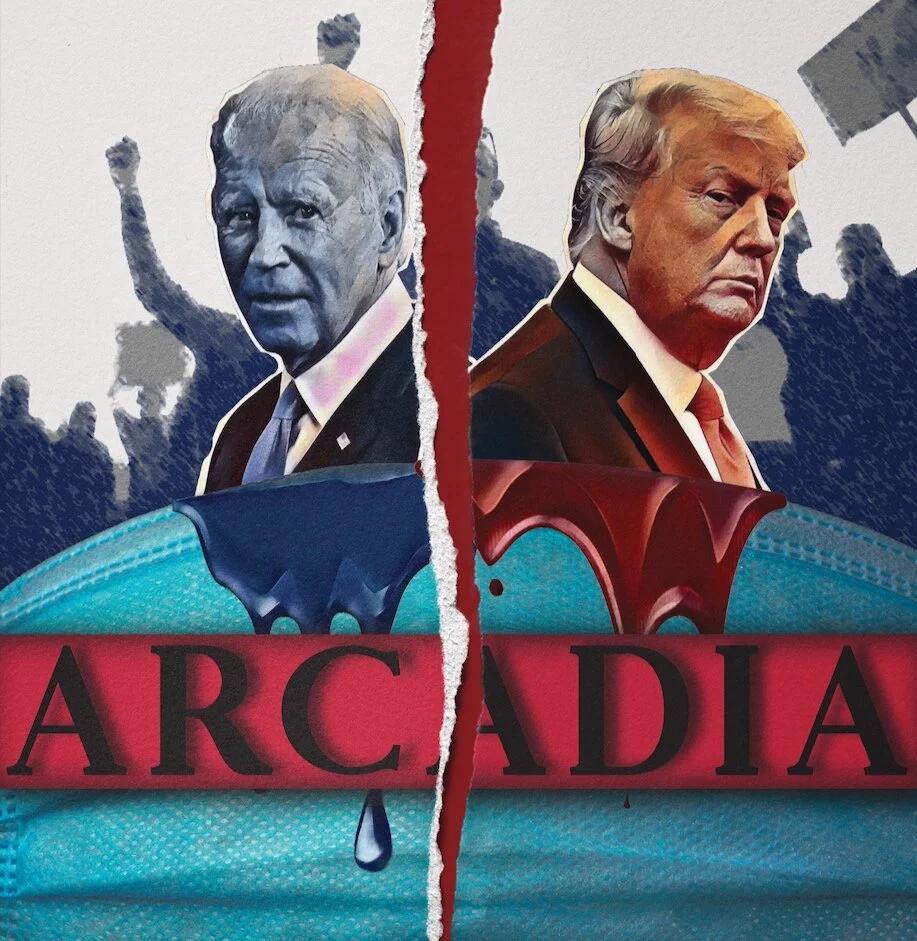
Letter From the Editors: Fall 2020 Issue XI
Welcome to Arcadia Political Review’s Eleventh Issue. Enjoy!

Erdoğan’s Cities: Who Are They For?
“Recep Tayyip Erdoğan’s AK Party may lack a substantial number of qualities that one might hope for in an elected government, but one thing cannot be denied, they possess an unyielding ambition to reform Turkey (some might argue, beyond recognition). This claim does not merely refer to more obvious shocks (the radical constitutional referendum in 2017, or the countless activist, and often provocative, foreign policy initiatives), but specifically to urban policy – yet another arena manifesting Erdoğan’s excerption of power.”


Antarctica Keeps Breaking Temperature Records: Here's Why That Should Scare You
“On Thursday, February 6th, 2020 the sun was shining on the Argentine research station Esperanza, and despite a breeze, the weather was pleasant, if not balmy.[1] T-shirt weather -- good for relaxing in the sun or going for a hike. The station recorded a temperature of 18.3 °C, or about 65 °F: nothing too out of the ordinary. Except, you know, if you’re in Antarctica.”


Symptoms of Neo-Imperialism in Economics: The Robinson Crusoe Narrative
“As a result, I naively dismissed the problematic example and attributed it to the time and context it was written in. It was only when my professor assigned Crusoe, Friday and the Raced Market Frame of Orthodox Economics Textbooks, by Matthew Watson that I finally caught a glimpse of the bigger picture – that the Robinson-Crusoe rhetoric is actually commonplace in economics textbooks.”

Protests in the US and Nigeria: Adult Problem, Young Leaders
“My view of modern Black-led youth movements comes from a place of sadness and admiration. I hate that people my age are forced to fight the battles of corruption but I am extremely humbled by the acts of courage I’ve seen. The hands of white supremacy have twisted our ideals to value money over people, production over product and individuals over communities. The EndSARS protests started as a call for the disbanding of the police force but turned into a multi-dimensional demand for a more equitable government.”

Iowa was a Mess and it Needs to Be Fixed
“The Iowa caucuses have been nothing short of a disaster. Before they began, full results were expected by the end of the night. It has now been over one week since Iowa, and there is still no official winner...Initial problems began when the Shadow App, an application used to vote in certain precincts, crashed.”