Are You Not Entertained?: How the Memeification of Politics Has Normalized Political Violence
On February 28, 2026, the Trump administration declared war on Iran with a series of bombings that killed hundreds of Iranian officials, including the Supreme Leader, Ayatollah Ali Khamenei, as well as at least 175 Iranian schoolgirls. Three days later, three United States servicemen joined the ranks of the nearly 2,000 casualties of the war (NYT, 2026). Within two days of these deaths, the White House posted a video documenting the obliteration of Iranian compounds and the loss of human life, footage which was also interspersed with SpongeBob humorously asking, “wanna see me do it again?” The montage was not unique. In the week following, the White House released an array of military montages that included actual battlefield footage spliced together with Grand Theft Auto intro sequences, Iron Man scenes, AI-generated bowling pins, and Nelly’s 2004 hit “Here Comes the Boom,” to name a few. These videos represent the disturbing disintegration of lines between meme wars and actual wars. In their wake, a new kind of political messaging has emerged, one that blends political radicalization with popular culture and entertainment spectacle. Political nuance, human suffering, and moral complexity are flattened into degrading short-form content. When people are viewed as decontextualized punchlines rather than complex beings, political violence becomes easier to swallow.
The use of propaganda to paint military opponents as “evil” is not new. The U.S. government has long used such tactics, as seen in the infamous “Destroy This Mad Brute” poster. However, such illustrations were mostly attempts to inspire citizens to enlist. The Trump administration’s videos drift from that goal. They contain no call to action, instead reveling in destruction and violence, reflecting a dramatic transformation in how the US government presents military operations and death. Long gone are the days of stone-faced national addresses and press briefings. Civility has been abandoned in favor of virality as the state embraces the currency of memes within the emerging attention economy. What has resulted is a neo-gladiatorial practice in which military matters have been turned into entertainment.

This extends beyond the military sphere, into the increasing memeification of all political discourse. Trump has been at the forefront of such a transformation recently, posting a now-removed Lion King spoof that depicted the Obamas as apes (WaPo, 2026). Trump similarly memified other political opponents in another AI-generated video that depicted him donning a crown, flying a jet, and dumping feces on protestors. These degrading memes are not just coming from Trump; they have been codified by the White House administration across X. From deportation ASMR to ICE montages set to Pokémon’s “Gotta Catch Em All” theme song, the trivialization of human suffering has become mainstream.
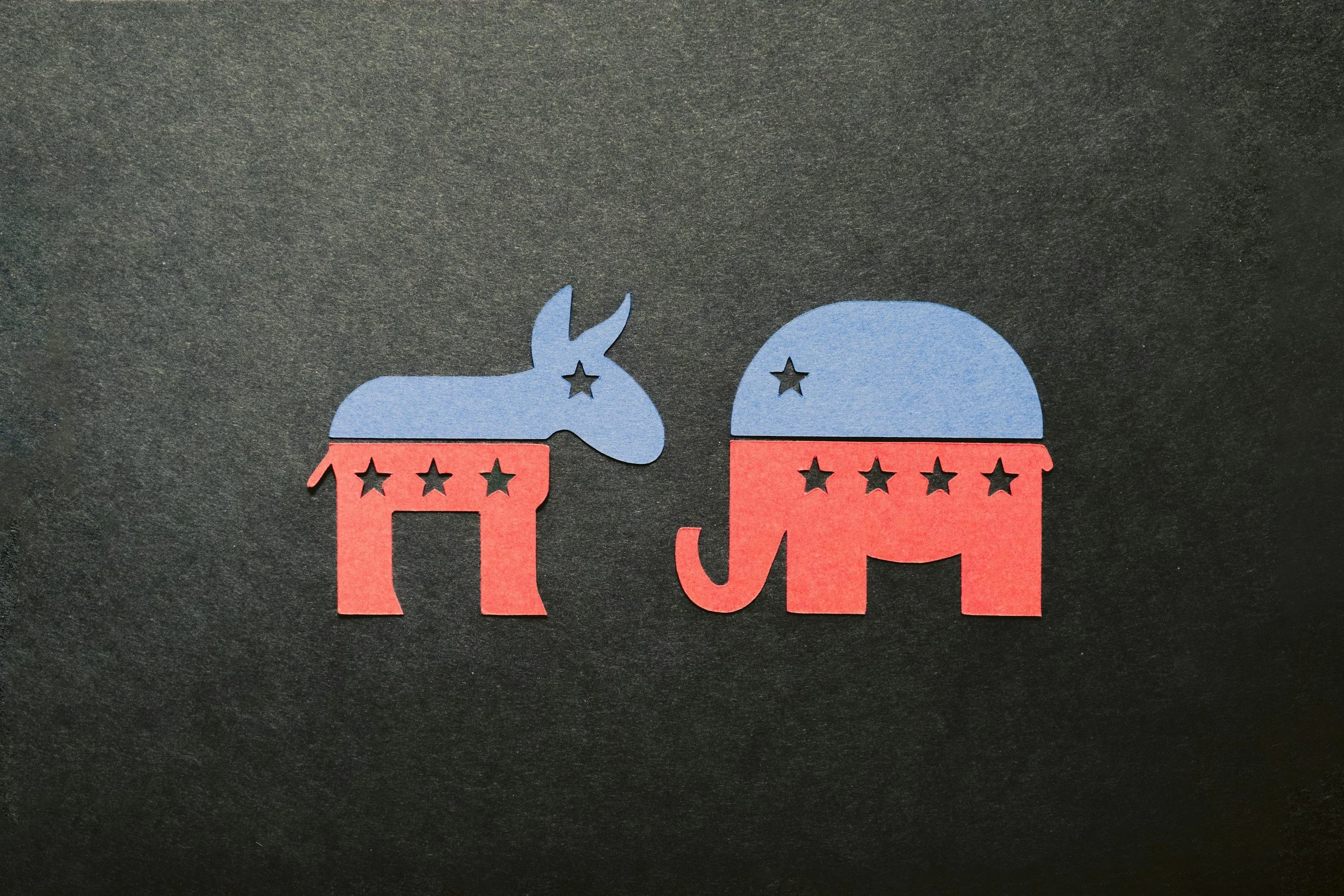
The rise in political violence knows no partisan bounds, and neither does the increased use of pejorative political memes that accompany it. Whether it's the array of fattened baby Vances or TikTok campaigns against so-called goyslop, liberal culture has taken the degrading memeification of politics in stride. The standard for discourse has lowered across both sides of the aisle. While memes alone do not cause direct violence, they shape the cultural attitude through which such violence becomes acceptable. Furthermore, they degrade and flatten human complexity and context. As communities and public figures become increasingly represented by hyper-polarized snapshots, people are reduced to provocative symbols, and violence becomes stylized, easily imagined as a punchline rather than a moral boundary.
This increasing acceptance of dehumanizing memes is troubling. American University Professor Kurt Braddock, who researches the effects of extremist propaganda, believes the “biggest problem with it is that it normalizes aggression” (WIRED, 2025). Propaganda no longer originates solely from the centralized sources of newspapers and the government, which were typically bound by professional norms and procedures. Anyone can make, modify, like, and post a meme. Their decentralized structure, accompanied by their ability to circulate instantaneously to an infinitely wide audience, exacerbates their effects. Furthermore, the participatory nature of memes and meme-making differentiates itself from past propaganda in a substantial way, as it makes people more active participants in the aggression that fuels degradatory discourse.
Accordingly, as political memes have become increasingly prevalent, a rise in aggression has followed. Nearly a third of Americans believe violence may be necessary to get the country back on track – an increase of 11 points in just two years (PBS, 2025). Such beliefs coincide with the realities of political violence in the U.S. Capitol. Police responded to 14,938 direct threats against congressional members in 2025, compared to the 8,613 in 2020 and 3,939 in 2017 (USCP, 2025). In 2025 alone, Minnesota Rep. Melissa Hortman and her husband were fatally shot; Pennsylvania Governor Josh Shapiro’s house was set on fire; the New Mexico Republican Party headquarters was set ablaze; and a shooter attacked the CDC headquarters. Trump alone faced two assassination attempts in 2024 (PBS, 2025).
More recently, memes honoring gunman Luigi Mangione as a saint and a hero, after he murdered UnitedHealthcare CEO Brian Thompson, and the humorous slogans of “Notices bulges OwO what’s this?” and “Hey, fascist! CATCH!” engraved on cartridges used in Charlie Kirk’s assassination have brought to light the extent to which political violence has morphed into internet satire, and human life has been trivialized (NYT, 2025). Political opponents have been dehumanized to an extent that direct acts of violence against them can be found humorous in and of themselves.
In the wake of such acts, Americans have remained increasingly unaffected. Polling shows that Google searches after acts of political violence now drop to baselines within days to weeks as opposed to the previous decade’s standard of months to years (Politico, 2025). Similarly they have begun to disappear from headlines within 10-15 days as opposed to the past decade’s standard of 25-30 (Politico, 2025). As violence morphs into “dark humor” and political entertainment, Americans are moving on at breakneck speeds.
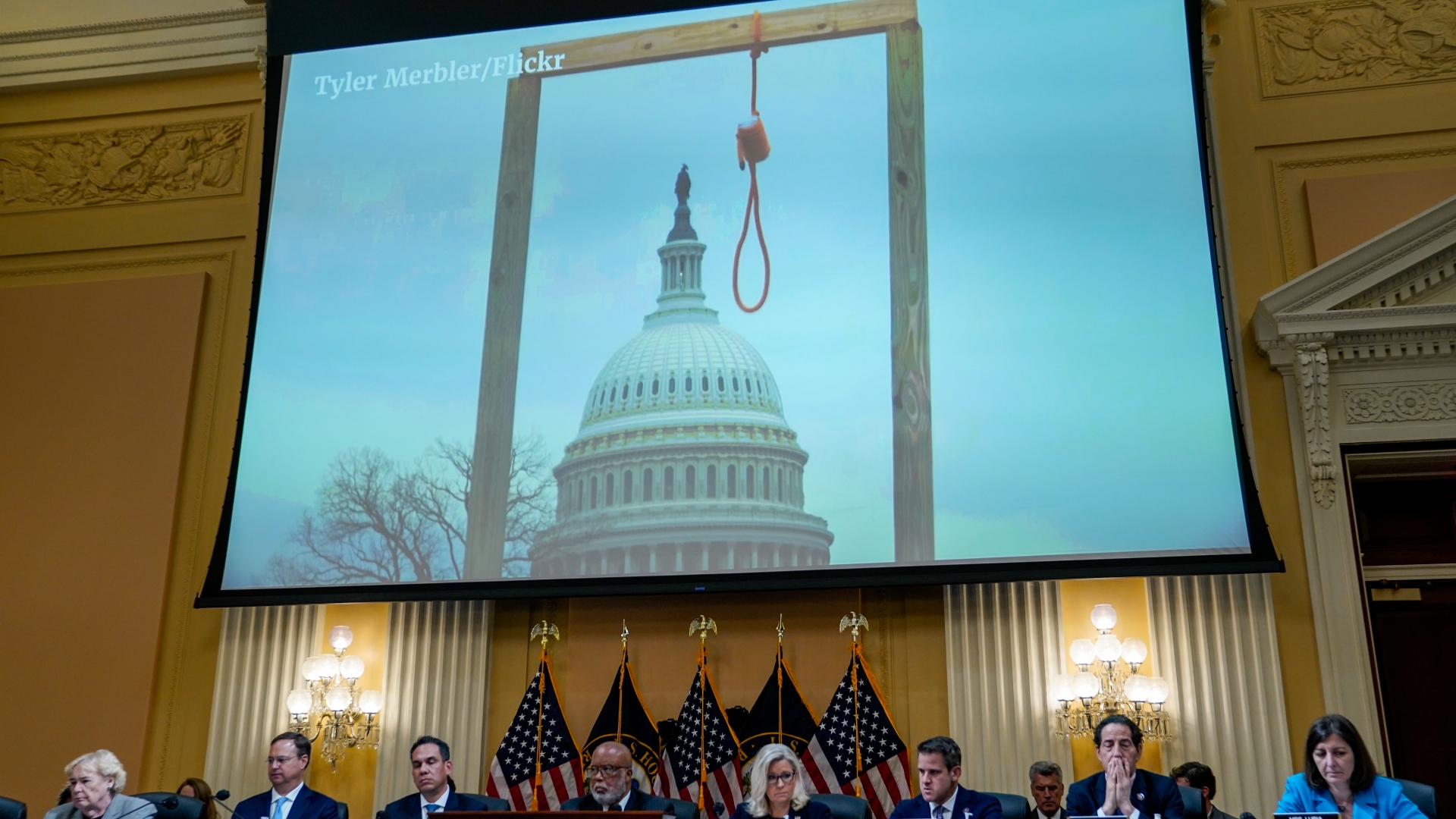
The increasing disregard for violence aligns with the callous memes that follow said acts. But, memes are also a predictive indicator of political violence. Tim Weninger, an expert in disinformation and dehumanization’s ties to political violence, says the increase of such memes “means something is impending. These are precursors to an eruption of violence” (Notre Dame News, 2024). The link between circulating politically salient images and real-world violence was further explored in a 2024 study that analyzed 3.26 million images from Russian bloggers on the brink of Ukraine’s invasion. They found an 8,925% increase in posts two weeks preceding the invasion, noting their intent to dehumanize opponents and reinforce in-group cohesion (Theisen et al. 2024). The flattening of political messaging into demeaning, humorous visual content has become a tool that not only justifies political violence but also leads to it. This transformation has become an increasingly visible political reality. The memes of “Pepe the Frog” and “Hang Pence” that circulated on the internet in 2019 gained a jarring sentience when actual gallows were erected, and police were brutalized during the 2020 Capitol insurrection. As American sociologist Joan Dreyfus stated, “the central idea animating the insurrection—that Trump had been denied his rightful victory in the election—was itself a memetic slogan, #StopTheSteal” (Atlantic, 2022). The first attempted coup in U.S. history was born from political memes.

These memes are a type of propaganda without a coherent propagandist. While countless Americans create and repost political imagery, the dehumanizing aspects are circulated with plausible deniability. Memes have become a normalized part of culture, and so the culture is blamed, and individual accountability is dissipated. The internet flows freely, reinforcing narratives about political enemies as one-dimensional caricatures. Over time, these narratives create a political atmosphere in which violence appears not only acceptable but warranted. Politics has become a spectacle in which, regardless of party, humiliation and violence are central narrative devices.
Understanding the memification of politics is, therefore, essential to understanding modern political instability. In an era where political memes spread faster than traditional rhetoric, the challenge for democratic societies is not to eliminate memes from political discourse, an impossible Orwelliantask, but to recognize their power. Constitutional tradition has long held that the answer to “bad speech” is not enforced silence, but more speech. Discourse that does not flatten and normalize aggression, but that engages critically and aims to understand. In the words of anthropologist Saba Mahmood, “Critique, I believe, is most powerful when it leaves open the possibility that we might also be remade in the process of engaging another’s worldview — when we leave open the possibility that we might come to learn things that we did not already know before we undertook the engagement with another.” While political memes are not going away, and neither is the danger they pose, the way we critique and engage in political discourse must change. Without such a shift toward critical engagement and mutual understanding, democratic discourse risks sliding further into spectacle, leaving citizens less as members of a political community and more as an active crowd normalizing violence in a modern arena.
Bibliography:
—The New York Times, “Live Updates: Iran Strikes and U.S. Response,” February 28, 2026, https://www.nytimes.com/live/2026/02/28/world/iran-strikes-trump#iran-strikes-us.
—The New York Times, “U.S. Soldiers Killed as War With Iran Escalates,” March 3, 2026, https://www.nytimes.com/2026/03/03/world/middleeast/us-soldiers-killed-iran-war.html.
—Maegan Vazquez, “Trump Shares, Then Deletes Video Depicting Obamas as Apes,” The Washington Post, February 6, 2026, https://www.washingtonpost.com/politics/2026/02/06/donald-trump-barack-michelle-obama-apes-video/.
—Dell Cameron, “Inside the Trump Administration’s Meme-Driven Deportation Strategy,” Wired, accessed March 13, 2026, https://www.wired.com/story/trump-administration-dhs-white-house-deportations-meme/.
—National Public Radio (NPR), “Poll: Americans’ Views on Political Violence, Free Speech, Vaccines, and the National Guard,” October 1, 2025, https://www.npr.org/2025/10/01/nx-s1-5558304/poll-political-violence-free-speech-vaccines-national-guard-epstein-trump.
—United States Capitol Police (USCP), “Threat Assessment Cases 2025,” United States Capitol Police Media Center, 2025, https://www.uscp.gov/media-center/press-releases/uscp-threat-assessment-cases-2025.
—PBS NewsHour, “How Recent Political Violence in the U.S. Fits Into a Long, Dark History,” PBS, accessed March 13, 2026, https://www.pbs.org/newshour/politics/how-recent-political-violence-in-the-u-s-fits-into-a-long-dark-history.
—Adrienne LaFrance, “The Meme Wars of January 6,” The Atlantic, September 2022, https://www.theatlantic.com/books/archive/2022/09/january-6-insurrection-meme-wars/671397/.
—The New York Times, “Tyler Robinson, Bullets, and the Messages Sent to Charlie Kirk,” September 13, 2025, https://www.nytimes.com/2025/09/13/us/politics/tyler-robinson-messages-bullets-charlie-kirk.html.
—Politico, “Political Violence and the Modern News Cycle,” September 14, 2025, https://www.politico.com/news/2025/09/14/political-violence-news-cycle-00563050.
—University of Notre Dame, “Experts Say Politically Salient Imagery on Social Media Can Predict Political Instability and Violent Conflict,” Notre Dame News, accessed March 13, 2026, https://news.nd.edu/news/experts-say-politically-salient-imagery-on-social-media-can-be-a-predictor-of-political-instability-and-violent-conflict/.
—arXiv, “Online Political Imagery and the Prediction of Political Violence,” February 2024, https://arxiv.org/html/2402.14947v1.
—Saba Mahmood, Politics of Piety: The Islamic Revival and the Feminist Subject, Princeton University Press, 2005, PDF edition, https://genderstudiesgroupdu.wordpress.com/wp-content/uploads/2014/07/saba_mahmood_politics_of_piety_the_islamic_revibookfi-org.pdf.