
Managing Autonomy: Why Denmark Keeps “Buying” Alignment from Greenland
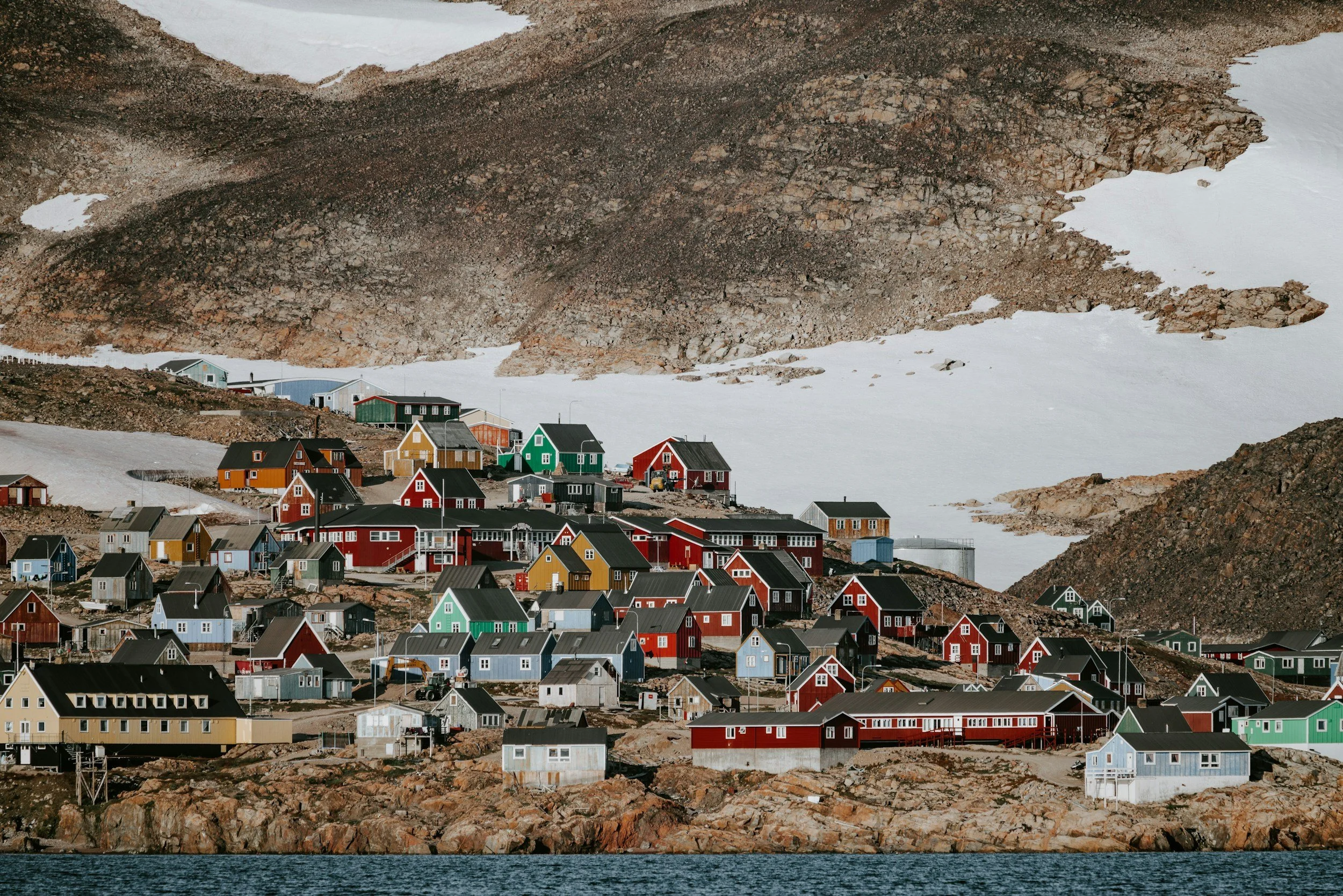
Credit: Adobe Stock
For most of the post-Cold War era, international states treated the Arctic as an exceptional space, politically insulated from the kinds of high-stakes rivalries that defined other regions. Today, that insulation is thinning. Climate change is reshaping access and mobility, major powers are paying closer attention, and the strategic value of territory in the Far North is rising (IPCC 2019; Käpylä and Mikkola 2015; Lackenbauer and Dean 2020). Inside the Danish Realm, these shifts increase Greenland’s value beyond a far-off autonomous territory. It is a strategic asset impacting Denmark’s alliance politics and security commitments, especially given the longstanding U.S.–Danish defense architecture tied to Greenland (United States and Kingdom of Denmark 1951).
With that context, a basic expectation follows. Denmark and Greenland should present a coherent Arctic posture. Officials in Copenhagen would clear or veto sensitive international engagements, and their counterparts in Nuuk would anticipate those security guardrails while resolving disputes privately and early. The reality looks different. Repeatedly, Greenland’s self-rule authorities initiate domestically grounded development projects that later become read as foreign-policy or national-security issues. Denmark retains responsibility for defense and foreign affairs under the self-government framework, and it often cannot preempt these moves cheaply (Government of Denmark 2009). Instead, it intervenes late, sometimes by paying to reshape outcomes. Over time, this motivation pattern will likely continue, since Greenland can gain traction before Denmark acts, and Denmark’s least costly political response is often to pay for realignment rather than enforce compliance upfront.
The 2017–2018 airport episode captures this model of behavior in its cleanest form. Greenland’s government pursued three new airports for modernization and economic lifelines. Chinese state-linked firms entered the bidding process, which Nuuk treated as a permissible development decision within its domestic purview. Leaders in Copenhagen saw the same facts differently. Critical infrastructure on the territory of a NATO member is not neutral, especially when an outside power can gain influence through financing, construction, or operating arrangements. Reporting emphasized that Greenland shortlisted a Chinese firm despite Danish concerns, and that Denmark responded by moving toward financing arrangements designed to put Chinese participation on ice (Jensen 2018a; Matzen and Daly 2018; Jensen 2018b). Ultimately, Greenland selected Denmark as a partner. That outcome signaled that Denmark structured its intervention to change the project’s strategic exposure (Reuters 2018). The details matter, but the sequence matters more. Nuuk moved first, and Copenhagen scrambled later. The Grønnedal naval base episode in 2016 showed a similar structure. Greenland entertained a transaction that made sense as an economic opportunity, while Denmark rejected it on security grounds once the buyer’s links became strategically salient (Matzen 2017).
Here lies the puzzle. Denmark holds formal authority over Greenland’s defense and foreign affairs under the self-government arrangement (Government of Denmark 2009). Global powers, especially the United States, have long treated Greenland as strategically consequential through defense arrangements and basing (United States and Kingdom of Denmark 1951). In these high-stakes situations, where the principal retains the legal levers, why do sensitive issues repeatedly reach the stage where Greenland sets events in motion and Denmark must correct course after the fact? Why does correction so often take the form of Denmark buying alignment rather than enforcing it upfront?
A principal–agent problem created by self-rule helps explain what looks irrational under a unitary-actor lens. The Danish state, as principal, delegates wide latitude over internal development to Greenland’s self-rule government, as agent, while retaining ultimate responsibility for national security and foreign affairs (Government of Denmark 2009). Denmark delegates because Greenland is distant, projects are complex, and Nuuk holds better information about feasibility constraints and domestic political tradeoffs. But delegation creates first-mover space for the agent, and first-mover space becomes dangerous when development choices cross into security terrain. That collision is predictable because the principal and agent weigh priorities differently. Greenland’s leadership values rapid development, infrastructure modernization, and expanding economic autonomy, often by diversifying partners and financing sources beyond Denmark. Denmark values security alignment and alliance credibility, alongside the long-run legitimacy and cohesion of the Realm. Those goals can coexist, but they collide near the boundary between domestic development and strategic exposure. In those moments, the principal may not tolerate the agent’s preferred path.
In that space, Denmark faces an unappealing tradeoff. Denmark can impose tight ex-ante oversight through formal clearance rules, watchdog reporting, and systematic screening. This reduces surprise but produces steady political friction and invites backlash against conditional autonomy. Alternatively, Denmark can delegate with a lighter touch by relying on consultation and rare intervention. That approach preserves legitimacy but accepts a higher risk of a sudden crisis once a project crosses a security threshold.
Denmark frequently chooses delegation with imperfect oversight, then reacts once the security relevance crystallizes. Timing is part of the problem. Denmark may lack decisive information or political justification, early enough to intervene without looking arbitrary or colonial. By the point of a clear red-line breach, Greenland often has momentum through public planning, tenders, and political commitments. This dynamic is visible in the airport case, where Chinese involvement became a salient political-security issue only after procurement and planning had already advanced (Matzen and Daly 2018; Jensen 2018b). At that point, Denmark’s choice set narrows. It can accept drift, block it bluntly, or reshape it through incentives.
Here is where the buyout logic becomes central. From a narrow legal perspective, Denmark can veto. From a broader strategic perspective, vetoes are costly. A hard block protects security in the short run but damages the legitimacy of self-rule and reveals to Greenlanders and outside observers the conditional and revocable nature of autonomy. That risks instability inside the Realm. It also paints Denmark as coercive in precisely the domain where it repeatedly tries to signal respect for Greenland’s autonomy (Government of Denmark 2009). So Denmark often prefers an incentive-based solution. It finances, restructures, or takes on ownership roles that preserve the project’s developmental viability while bringing it inside Denmark’s security perimeter. As the airport episode illustrates, Danish funding crowded out Chinese involvement while keeping the airports politically alive in Greenland (Jensen 2018b; Reuters 2018).
In other words, Denmark substitutes money for coercion. It pays real fiscal costs to avoid the long-run political costs of repeatedly asserting formal authority. Outside observers should not mistake this for benevolence or irrational generosity. It is a strategic instrument designed to realign the agent without humiliating it. It also works because Denmark can frame intervention as support rather than punishment, lowering the temperature and reducing the chance that each dispute becomes a referendum on Greenland’s autonomy.
Ranked terms help explain the payoffs that drive this equilibrium. Greenland prefers outcomes where projects proceed quickly under Greenlandic supervision, where Nuuk retains initiative, and where autonomy appears meaningful. Outcomes worsen as Denmark delays, reshapes, or publicly subordinates Greenland’s choices, and the worst is an outright veto without an alternative. Denmark prefers outcomes where Greenland develops in ways consistent with Danish security policy, avoiding both strategic exposure and political backlash. Denmark’s best outcomes are those where it pays to realign a project while containing political fallout. Denmark’s worst outcomes are those that generate allied distrust, reputational damage, or heightened vulnerability. This model also generates clear implications. If Denmark invested in robust monitoring and formal pre-clearance for sensitive categories such as critical infrastructure, strategic land purchases, or sensitive minerals, it could catch threshold issues earlier and reduce late-stage panic. The downside is that Greenland would experience more routine constraints, and resentment could rise. Alternatively, Denmark could rely on outright vetoes whenever a project crosses a communicated security baseline. That would protect security but expose Greenland’s autonomy as bounded. A third possibility is that Greenland internalizes Denmark’s security line and restrains itself from the outset, pursuing development trajectories that align cleanly with Copenhagen’s red lines. But that outcome hinges on credibility. If Nuuk expects Denmark to prefer incentive-based realignment, meaning correction rather than punishment, then pushing further becomes rational because the downside is cushioned.
Seen this way, Denmark’s recurrent late interventions are not merely bureaucratic sloppiness. They are a predictable byproduct of an arrangement trying to accomplish two goals at once, meaningful local autonomy and centralized responsibility for national security. Delegation creates first-mover space for the agent. Divergent preferences create the possibility of drift. Informational frictions delay recognition of strategic stakes. The political cost of coercion makes buying alignment a consistently attractive tool for the principal. The airport episode and the blocked base sale look like discrete controversies, but together they point to a deeper mechanism. Self-rule allows Greenland to set agendas, and Denmark’s most politically sustainable method of maintaining both security and legitimacy frequently involves compensation, not command. In a region where strategic relevance is rising faster than institutional arrangements can adapt, that logic matters.
Bibliography
Anderson, Nicholas D. “Push and Pull on the Periphery: Inadvertent Expansion in World Politics.” International Security 47, no. 3 (2023): 136–73. https://doi.org/10.1162/isec_a_00454.
Government of Denmark. 2009. Act No. 473 of 12 June 2009 on Greenland Self-Government (English translation). Copenhagen: Danish Prime Minister’s Office / State Administration. https://english.stm.dk/media/4vgewyoh/gl-selvstyrelov-uk.pdf.
Hanson, Kolby. 2025. Class Lectures (Weeks 1-10). GOVT312: Strategic Dilemmas In Politics
Intergovernmental Panel on Climate Change (IPCC). 2019. Special Report on the Ocean and Cryosphere in a Changing Climate (SROCC). Geneva: IPCC. https://www.ipcc.ch/srocc/.
Jensen, Teis. 2018a. “Greenland Shortlists Chinese Company for Airport Construction Despite Denmark’s Concerns.” Reuters, March 27.
Jensen, Teis. 2018b. “Denmark, Greenland Agree to Look at Airport Funding, Putting Chinese Investors on Ice.” Reuters, June 13.
Käpylä, Juha, and Harri Mikkola. 2015. On Arctic Exceptionalism: Critical Reflections in the Light of the Arctic Sunrise Case and the Crisis in Ukraine. FIIA Working Paper 85. Helsinki: Finnish Institute of International Affairs. https://www.fiia.fi/wp-content/uploads/2017/01/wp85.pdf.
Lackenbauer, P. Whitney, and Ryan Dean. 2020. “Arctic Exceptionalisms.” In The Arctic and World Order: The Question of Future Regimes to Manage Change, edited by Kristina Spohr and Daniel S. Hamilton, 327–355. Washington, DC: Johns Hopkins University Press / Brookings Institution Press. https://transatlanticrelations.org/wp-content/uploads/2020/12/The-Arctic-and-World-Order-ch14.pdf.
Matzen, Erik. 2017. “Denmark Spurned Chinese Offer for Greenland Base Over Security—Sources.” Reuters, April 7.
Matzen, Erik, and Tom Daly. 2018. “Greenland’s Courting of China for Airport Projects Worries Denmark.” Reuters, March 23.
Reuters. 2013. “Greenland Votes to Allow Uranium, Rare Earths Mining.” Reuters, October 25.
Reuters. 2018. “Greenland Picks Denmark as Airport Project Partner over Beijing.” Reuters, September 10.
United States and Kingdom of Denmark. 1951. Agreement Relating to the Defense of Greenland. April 27. https://avalon.law.yale.edu/20th_century/den001.asp.
U.S. Geological Survey. 2008. “Circum-Arctic Resource Appraisal: Estimates of Undiscovered Oil and Gas North of the Arctic Circle.” Fact Sheet 2008–3049. Reston, VA: U.S. Geological Survey. https://pubs.usgs.gov/fs/2008/3049/.
Vestergaard, Cindy, and Gry Thomasen. 2016. “Danish-Greenlandic Declaration on Nuclear Safeguards: A Stepping Stone to Legislation.” DIIS Comment. Danish Institute for International Studies, February 9. https://www.diis.dk/en/research/danish-greenlandic-declaration-on-nuclear-safeguards.
World Nuclear News. 2016. “Denmark and Greenland Reach Uranium Export Agreement.” January 20. https://www.world-nuclear-news.org/Articles/Denmark-and-Greenland-reach-uranium-export-agreeme.