
Syrian Women’s Role in Civil Society in the Postwar Transition
Credit: Adobe Stock
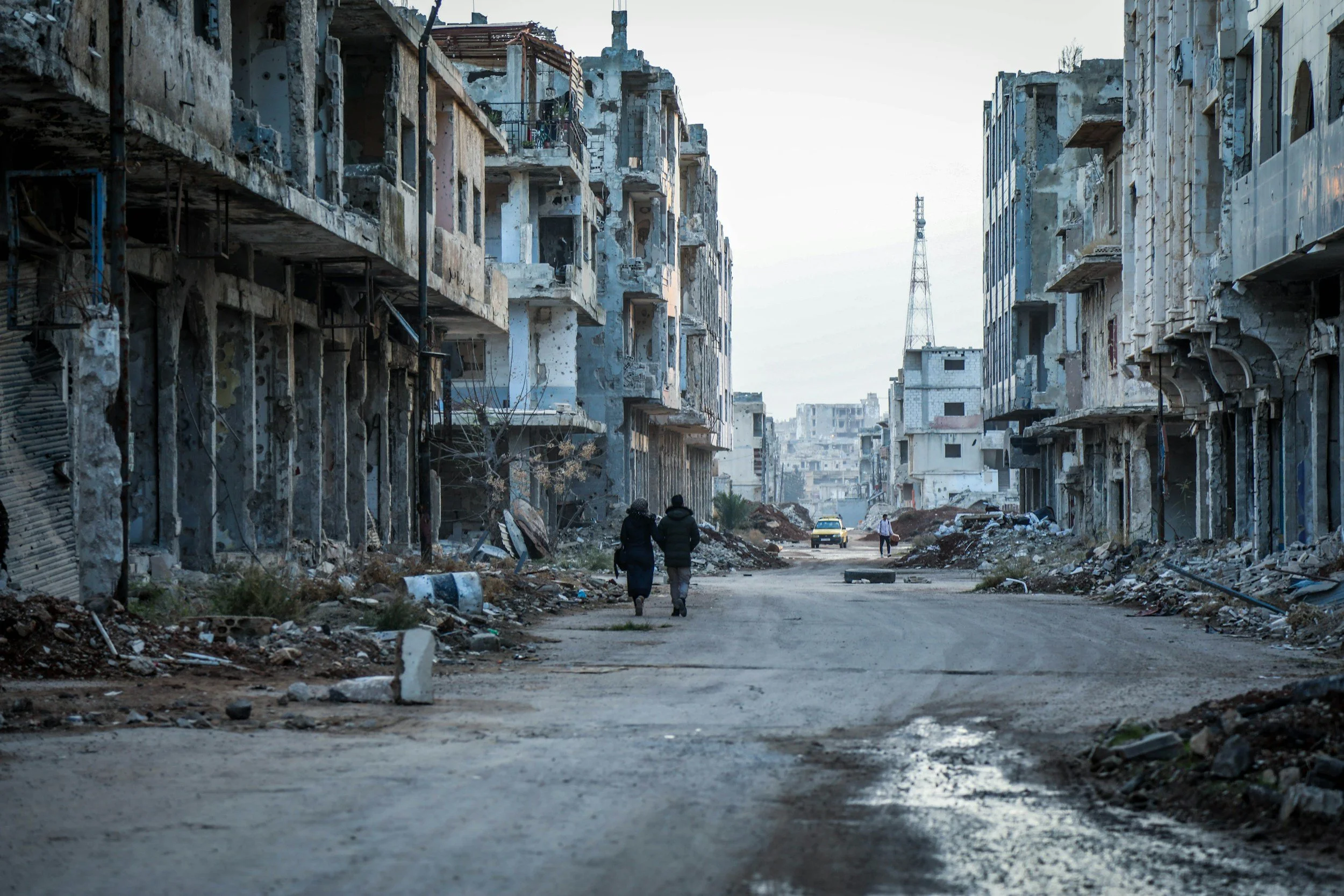
In December of 2024, brutal Syrian dictator Bashar al-Assad fled Syria, pushed out by opposition groups after a horrific thirteen-year civil war (Gritten, 2025). With the fall of Assad, al-Sharaa’s Hayat Tahrir al-Sham (HTS) group–a Syrian Sunni rebel group–is acting as the governing party of a newly post-war nation (Al Jazeera, 2025). The former constitution is suspended, and the military is frozen. As a new constitution is being drafted, the interim government claims to be facilitating the transition into an electoral, inclusive state. In this rare moment, scholars, diplomats, and activists alike have contributed to a conversation about how Syria should rebuild to ensure the possibility of a safe and comfortable nation—fueled with a burning hope for dignity and peace, which Syria has been denied for too long (Khurma, 2025).
This moment also presents an opportunity for the women of Syria—historically marginalized and yet invaluable in the resistance to tyranny—to actualize a future of equality and justice. Syria’s history with gender has been tumultuous, with limited political and social freedoms and rights for women. Assad’s Ba’ath party passed a few half-hearted reforms to improve conditions for women, theoretically opening up political and social life. But, discriminatory practices were still deeply embedded in the government and culture, resulting in codified patriarchal practices and persistent exclusion from public life (Farouk, 2025).
In 2011, men and women joined in protest of the Assad regime, met with a horrific escalation of state violence. This propelled the nation into a brutal and long-lasting civil war. During the war, Syrians suffered violence, starvation, displacement, and trauma; and there were aspects of this suffering that primarily or exclusively affected women. 74 percent of the 6 million Syrians facing hunger and malnutrition were women and girls, and the destruction of health services for reproductive care, as well as increases in sexual violence, demonstrate only some of the ways Syrian women have disproportionately suffered throughout this conflict (UN, 2023).
Now, in the aftermath of the Assad regime, scholarship has considered the stakes of state building in Syria for women, with activists and scholars advocating for political opportunities to advance women in office (Rayes, Kabawat, 2025). In the transitional government, local and international attention has been called to the inclusion of women in politics, with some notable successes and failures. Organizations, like the Syrian Women’s Council, and individual activists have made their way into negotiations, advocating for the importance of including women in state-building. However, in the complex interim election systems, only a few officials on the committees tasked with governance and elections were women, and of those, many represent traditional patriarchal views of the place of women in society (Alsamara, Gordon, Dolan-Evans, 2025). There is certainly a focus on furthering the positive progress and correcting the failures of gendered political equality in Syria’s new chapter.
However, this analysis is incomplete. As authors Rana Khoury and Wendy Pearlman articulate in their work about the importance of Syrian civil society, the impact that people have extends beyond the political world—into the diverse and dispersed civil society (Khoury, Pearlman, 2025). Syrian civil society was virtually non-existent under almost absolute repression under the Assad regime, met with horrific state violence (Ashraph, 2022). Still, when Syria erupted into civil war, Syrians and their diaspora organized on the ground with creativity and resiliency, spreading news and aiding in disaster relief. The White Helmets, for example, consisted of Syrian civilians who conducted rescues of those trapped or hurt in their community (Stone, 2025). The Huquqyat group, to name another example, was formed by women legal experts on the ground in Syria, who worked tirelessly to extend legal training to Syrian women and collect crucial information and evidence of crimes during the war (Huquqyat). Khoury and Pearlman voice that such instances of civil society organizing are an important part of the future of Syria, and ought to be included in peace talks, transitional plans, and negotiations. The case is compelling—civil society acts as a form of accountability against the government, allowing non-state controlled data collection, advocacy, and organizing. Civil society, composed of organizations and individuals, collects evidence against the crimes of the war, tunes into the needs of everyday people, and allows for minority voices to be represented (The Syria Campaign, 2025). It is a vital function of a safe and prosperous Syria, which ought to have a space at the negotiation and government tables.
But this literature misses out on the specific and unique importance of Syrian women in civil society, and therefore, neglects their evidence, experiences, and contributions to accountability, justice, and peace. The existing advocacy and scholarship only considers women in Syria with an exclusive focus on women in politics. Instead, there must be serious consideration of Syrian women in civil society, synthesizing the literature on both the inclusion of women in Syrian politics and the inclusion of Syrian civil society. This means interviewing and inviting not just politicians, but women professionals, artists, mothers, refugees, and survivors on the ground. This means highlighting the organizations in civil society that formed and fought for the rights and protections of women, including them in transitional planning and negotiations. It means redefining understandings of security, peace, and prosperity so that they account for and include the plight of women in legal and international documentation, accounting for the experiences of women in Syria.
The intentional inclusion of women in civil society matters—for gender specific and farther reaching reasons. The women of Syria have carried a terrible burden of violence, starvation, and death for the past thirteen years. Before that, they suffered under the poverty and political repression of Assad, alongside political and cultural practices that disempowered and abandoned them. The stakes of state building now are clear for these women—a rare and invaluable chance at participating in and shaping the future of the country they have lived in and died for.
Beyond that, the necessity of women in civil society in state-building extends beyond the immediate benefits to women. Naively, in conflict, women's issues are considered to be separate from and less important than the primary political projects of national building and peace agreements on the international stage. This characterization misses the mark—an evaluation of civil conflict, violence, and peace is fundamentally incomplete without the perspectives of women. Women were victims and witnesses to the crimes of the war; they experienced the effects of crumbling healthcare, access to food, and safe living; they were forced into traditional roles; they were front and center to the domestic and private conversations and attitudes surrounding sectarian conflict. Women healthcare workers provided vital care and faced opposition to their contributions. A version of state-building highlighting only the experience of men is one that does not consider so many of these important components of the conflict. It misses the way that domesticity, family, civil experiences–as well as the unique perspectives of female professionals, lawyers, healthcare workers, and activists–might change the picture of the Syrian civil war, and the potential for a new future. Including the women of civil society in state-building policy–women who experienced the Syrian Civil War and made their own contributions to bringing peace and justice—is absolutely essential to understanding the full picture of the Syrian tragedy, and necessary for constructing a future with dignity and peace for all.
Bibliography:
—Office of the United Nations High Commissioner for Human Rights, “Gendered Impact of the Conflict in the Syrian Arab Republic on Women and Girls,” June 12, 2023, https://www.ohchr.org/en/statements-and-speeches/2023/06/gendered-impact-conflict-syrian-arab-republic-women-and-girls.
—Kinda Alsamara, Eleanor Gordon, and Elliot Dolan-Evans, “Syria’s New Leader Promised Democracy. Then He Excluded Women from Parliamentary Elections,” The Conversation, October 23, 2025, republished at The Oasis Reporters, https://theconversation.com/syrias-new-leader-promised-democracy-then-he-excluded-women-from-parliamentary-elections-267625
—مجلس المرأة السورية [Syrian Women’s Council], “حقوق المرأة… أساس العدالة والتقدم” [“Women's Rights… The Foundation of Justice and Progress”], October 19, 2025, مجلس المرأة السورية, accessed January 29, 2026, https://s-womens.com/?p=3048.
—Syrian Arab News Agency (SANA), “Damascus University Pushes to Boost Women’s Leadership in Syria,” November 27, 2025, https://sana.sy/en/education/2280172/.
—UNFPA – United Nations Population Fund, Whole of Syria Gender-Based Violence Area of Responsibility: Voices from Syria 2019 — Assessment Findings of the Humanitarian Needs Overview, ReliefWeb (March 10, 2019), https://reliefweb.int/report/syrian-arab-republic/whole-syria-gender-based-violence-area-responsibility-voices-syria-2019.
—Zara Farouk, “Gender, Power, and Peacebuilding in Postwar Syria,” Terrain Analysis, New Lines Institute (Middle East Center, Gender, Peace & Security), September 16, 2025, https://newlinesinstitute.org/middle-east-center/gender-power-and-peacebuilding-in-postwar-syria/.
—Khabat Abbas, “Syria’s Gender Divide Intensifies: Equality in the North, Patriarchal Pushback in the South,” Truthdig, November 25, 2025, https://www.truthdig.com/articles/syrias-gender-divide-intensifies-equality-in-the-north-patriarchal-pushback-in-the-south/
—Netherlands Institute for Multiparty Democracy, “Putting Indigenous Women at the Centre of Peace-Building Processes: A Story from Guatemala,” December 19, 2023, https://nimd.org/putting-indigenous-women-at-the-centre-of-peace-building-processes-a-story-from-guatemala/.
—Roborgh, Sophie. 2025. “Challenging Becomings: Gender Dynamics in the Syrian Medical-Humanitarian Response.” Journal of Intervention and Statebuilding 19 (1): 24–43. doi:10.1080/17502977.2023.2284651.
—Merissa Khurma, “How Syrian Women Are Shaping Their Country’s Future,” Rice University’s Baker Institute for Public Policy, March 14, 2025, https://doi.org/10.25613/av0t‑4r48.
—Diana Rayes and Hind Kabawat, “Syria’s Women Face a New Chapter. Here’s How to Amplify Their Voices,” Atlantic Council (MENASource), March 10, 2025, https://www.atlanticcouncil.org/blogs/menasource/syrias-women-face-a-new-chapter-heres-how-to-amplify-their-voices/
—Georgetown Institute for Women, Peace and Security (GIWPS), “The Human Rights of Women in Syria: Between Discriminatory Law, Patriarchal Culture, and the Exclusionary Politics of the Regime,” February 2021, https://giwps.georgetown.edu/resource/the-human-rights-of-women-in-syria-between-discriminatory-law-patriarchal-culture-and-the-exclusionary-politics-of-the-regime/
—Huquqyat, “Programmes,” Huquqyat, accessed January 29, 2026, https://huquqyat.org/programmes/.
—Hanan Tabbara and Garrett Rubin, Women on the Frontlines of Conflict Resolution and Negotiation: Community Voices from Syria, Iraq and Yemen (UN Women Regional Office for Arab States, 2018), https://arabstates.unwomen.org/en/digital-library/publications/2018/8/women-on-the-frontlines-of-conflict-resolution
—David Gritten, “Ahmed al-Sharaa Named Syria's Transitional President,” BBC News, January 31, 2025, https://www.bbc.com/news/articles/c8d9r0vg6v7o.
—Al Jazeera, “Syria’s Ahmed al‑Sharaa Named President for Transitional Period,” January 29, 2025, https://www.aljazeera.com/news/2025/1/29/syrias-ahmed-al-sharaa-named-president-for-transitional-period.
—Sebastian Usher, “Who Are the Rebels in Syria?” BBC News, December 8, 2024, https://www.bbc.com/news/articles/ce313jn453zo.